





- Home
- Fields of Work
- Fuel Piping Works
Fuel piping works, sealed and documented
Fuel and vapor piping, double-wall and fiberglass piping, connections to tanks and dispensers inside sealed sumps, fill systems and valves, and pressure and tightness testing with full documentation.
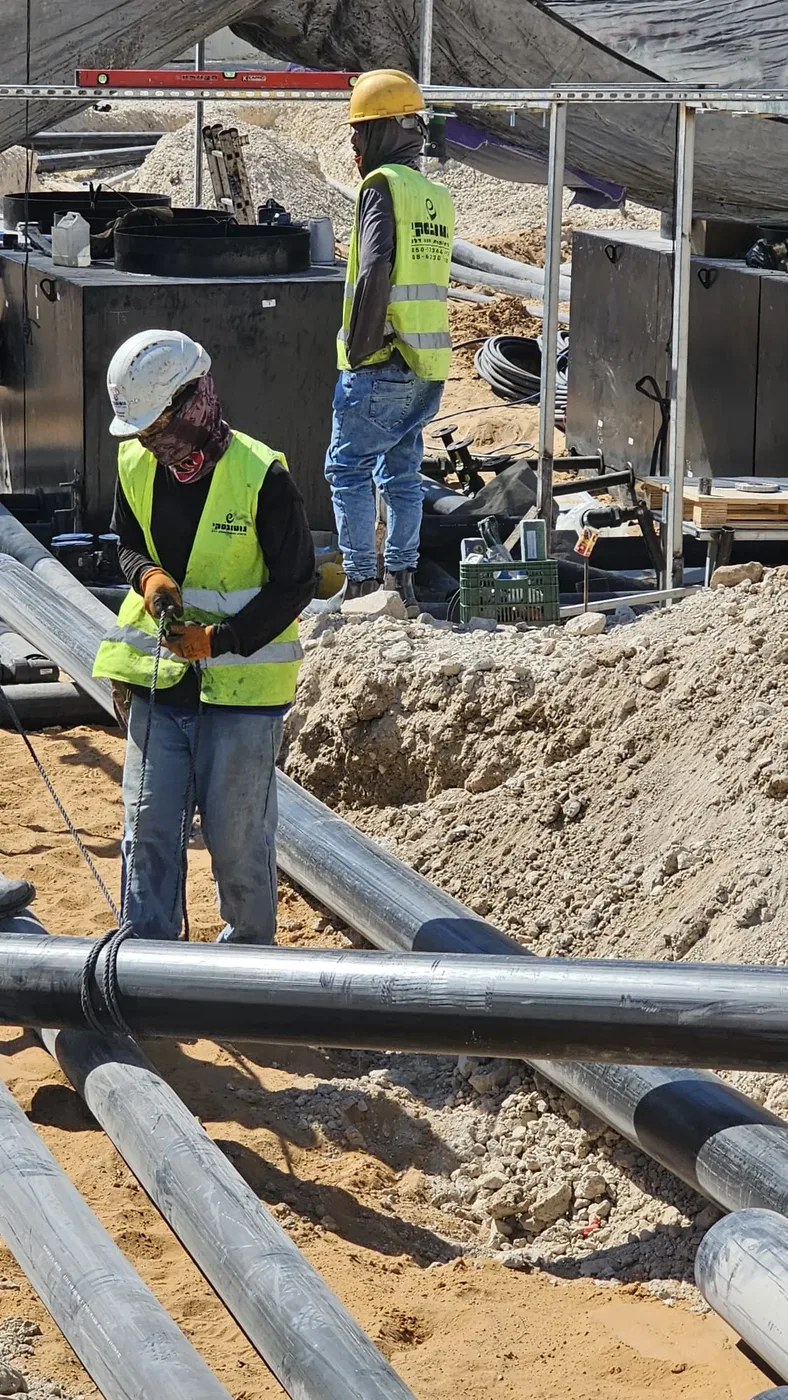
The piping is where a station leaks
Most leaks at fuel stations do not start in the tank but in the piping and the connections: a worn section, a flange that was not sealed, a joint closed in concrete without being tested. That is why we treat the piping as the station's critical system: pipe within a pipe, connections only inside sealed sumps, and every section pressure and tightness tested before it is closed.
The company started in 1972 as a piping and infrastructure contractor, and that is still the foundation of everything we do. Piping connections we made decades ago are still tight and in service.
All types of fuel piping
- Fuel and vapor pipingSuction, fill and vent lines from the tanks to the dispensers.
- Double-wall pipingPipe within a pipe, with monitoring of the interstitial space and leak detection.
- Fiberglass pipingFiberglass fuel piping, as installed at the Nover station in Ashdod.
- Stage II vapor recovery pipingVapor piping routes from the dispensers to the tank.
- Connections in sealed sumpsPiping connections only inside sealed sumps under the dispensers and above the tanks.
- Fill systems and valvesSpill containment, valves, flanges and double-wall fill systems.
- Generator feed linesN+1 feed lines for emergency generators in data centers.
- Testing and documentationPressure and tightness testing of every section, with documentation handed to the client.
From the route to the test, in five stages
- 01Route planning
Planning the piping route against the plans of the station, the tanks and the dispensers.
- 02Trenching
Trenches at the required depths and slopes, with a sand bed.
- 03Laying and connecting
Laying the piping, connections inside sealed sumps, fill systems and valves.
- 04Pressure and tightness testing
Testing every section before backfill, with full documentation.
- 05Backfill and handover
Controlled backfill, pouring, and handover of the test documentation.
Nover, Ashdod: fiberglass piping and a double-wall fill system
As part of rebuilding the Nover station in Ashdod we installed fiberglass fuel piping, a Stage II vapor recovery system, a double-wall fill system and standard 5-gallon spill containment. At the Gal HaRishonim station in Ashdod, now in progress, new vapor recovery piping and rectangular sumps that prevent fuel leaking into the ground are being installed.
The same piping, on a larger scale, also feeds generators in data centers: N+1 feed lines from the storage tanks to the day tanks. All projects
Piping From the Field
Questions about Fuel Piping
What is the difference between single-wall and double-wall piping?
In double-wall piping the fuel line runs inside a containment pipe, and the space between them is monitored. A leak from the inner pipe is stopped by the containment and detected, instead of reaching the ground.
Can only the piping be replaced, without replacing the tanks?
Yes, when the tanks are sound. We open the piping route, replace it with double-wall piping and sealed sumps, and test for tightness before closing.
What do you receive when the work is done?
Documentation of the pressure and tightness tests for every piping section, required for licensing and used by the station over the years.
Need new piping? We'll check the route
Leave your details and we will call you back for a short conversation. If needed, we visit the station to check the route before quoting. Or call the office directly: 08-622-9307