








- Home
- Fields of Work
- Data Centers
Fuel infrastructure and emergency generators for data centers, when the power cannot go down
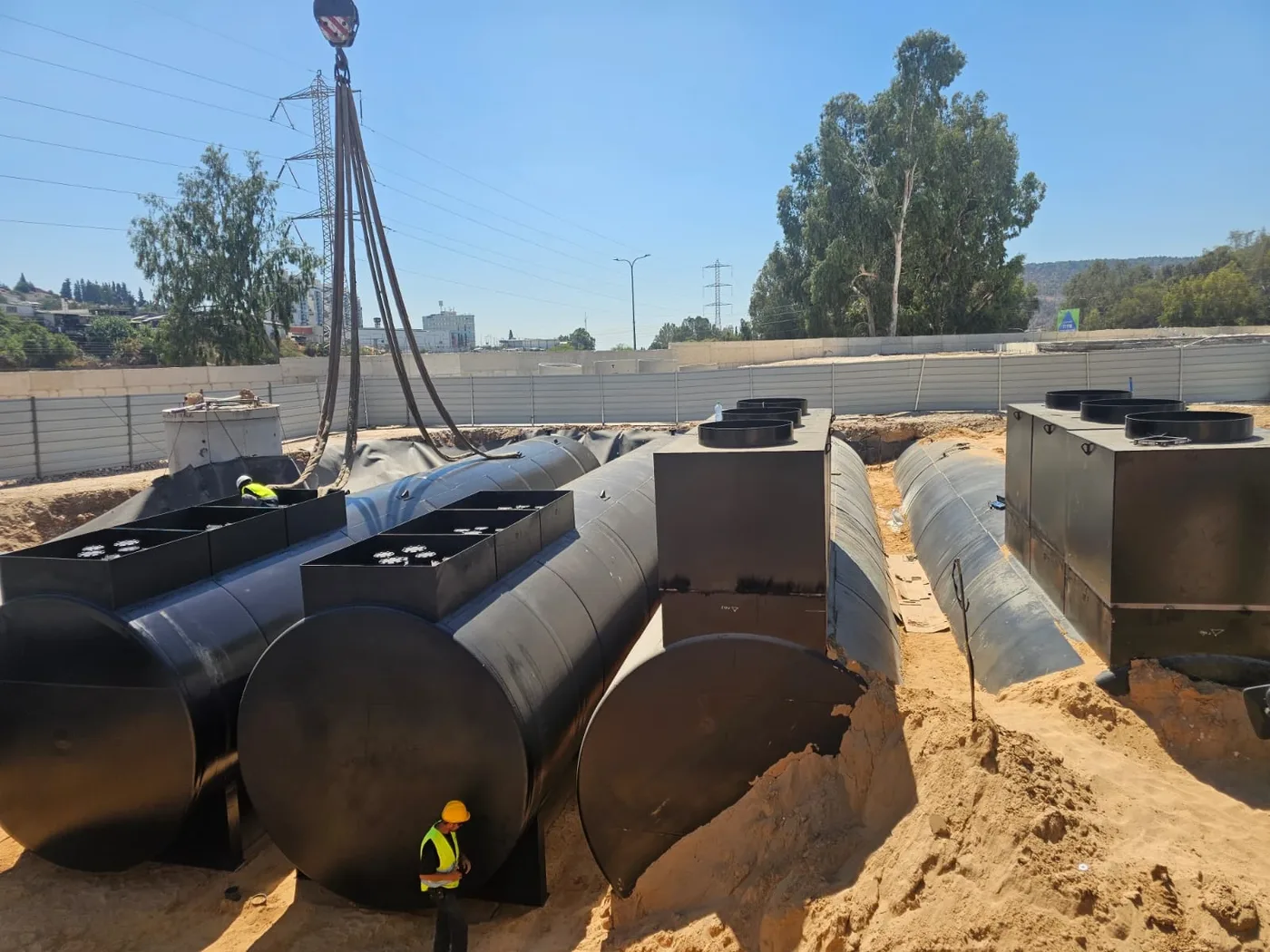
From fuel station to data center
A data center is backed up by emergency generators, and the generators depend on the fuel infrastructure: large storage tanks, day tanks beside each generator, and feed lines that must keep working even when one line is out of service. It is the same engineering as a fuel station, on a larger scale and with a reliability requirement that leaves no room for error.
Decades of experience with fuel stations, double-wall tanks, sealed piping and documented testing, led us to this field. We work in coordination with the electrical consultants, the designers and the regulators, and hand over infrastructure tested section by section.
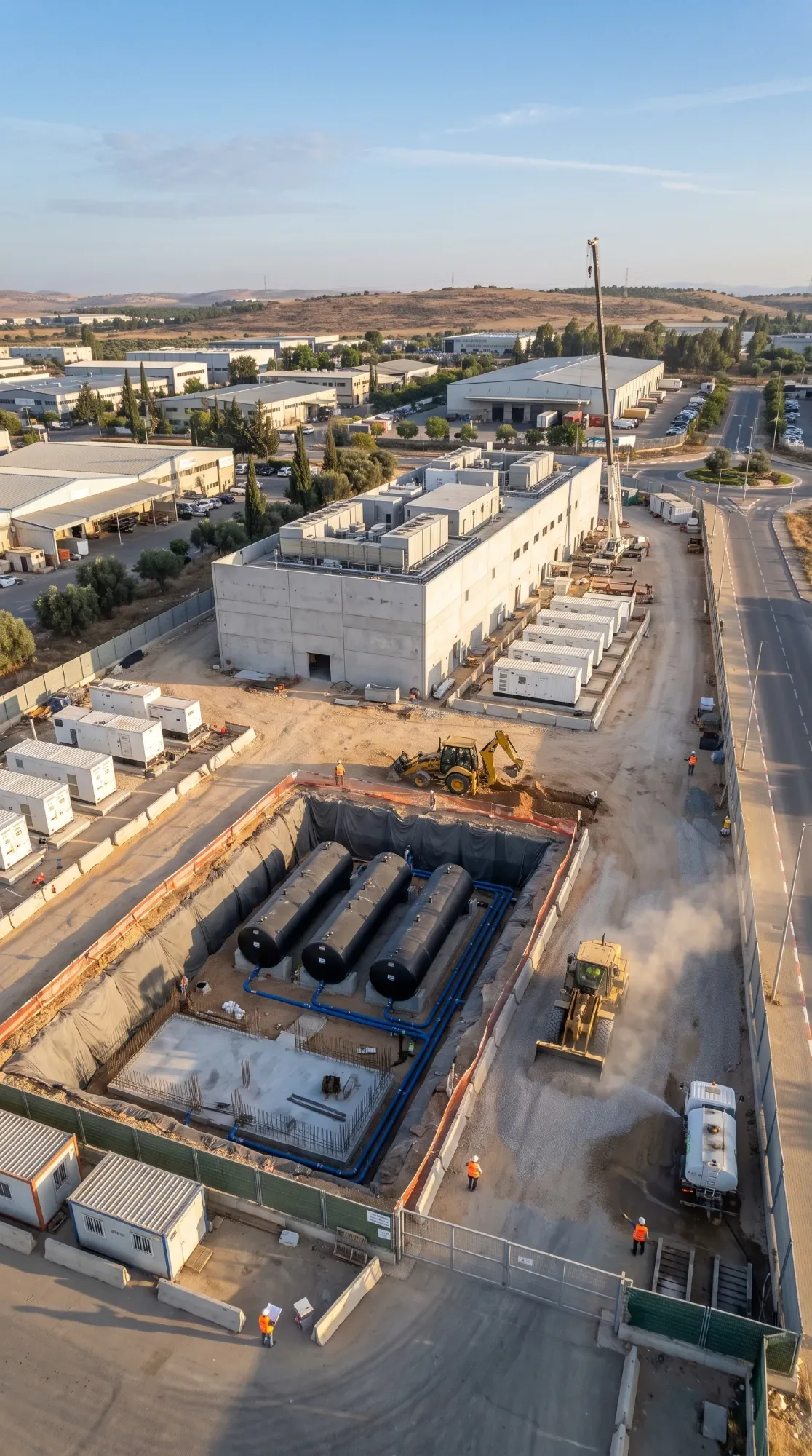 Rendering · Data center in Shoham: the tank pit, the generator yard and the building
From the tank to the generator, without a single point of failure
The fuel path in a data centerSeven things that must work in a data center's fuel infrastructure
A cross-section of a typical site. Each number is a stage in the fuel path, and each stage is work we plan, execute, test and document. Step through the numbers.
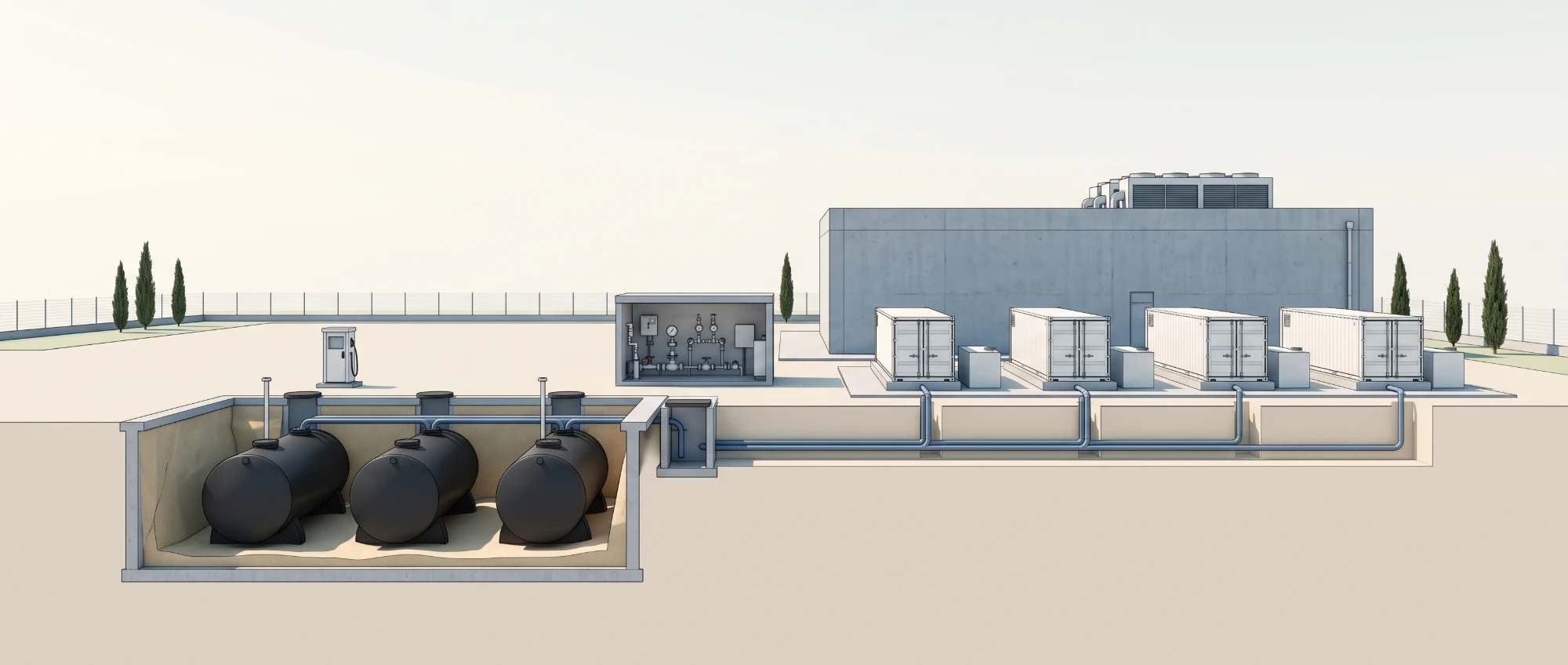 Rendering · Typical site
Underground tanks
The facility's main fuel tanks, buried in a concrete pit.
- Double-wall steel tanks with monitoring of the interstitial space
- Capacity follows the backup hours the facility defines, not the other way around
- Saddles, anchoring and sand backfill to the manufacturer's specification and the standard
- Accessible sumps and measurement points above every tank
The dashed line marks the direction of fuel flow. The cross-section is a rendering of a typical site, not a specific project. In every project the configuration is set together with the electrical consultant, the generator supplier and the authorities.
A generator farm, from the inside
Five stops on a typical site: the generator yard, the tank farm, the unloading bay, the pump room and the generator hall. Drag to look around, and move between stops from the list or the arrows.
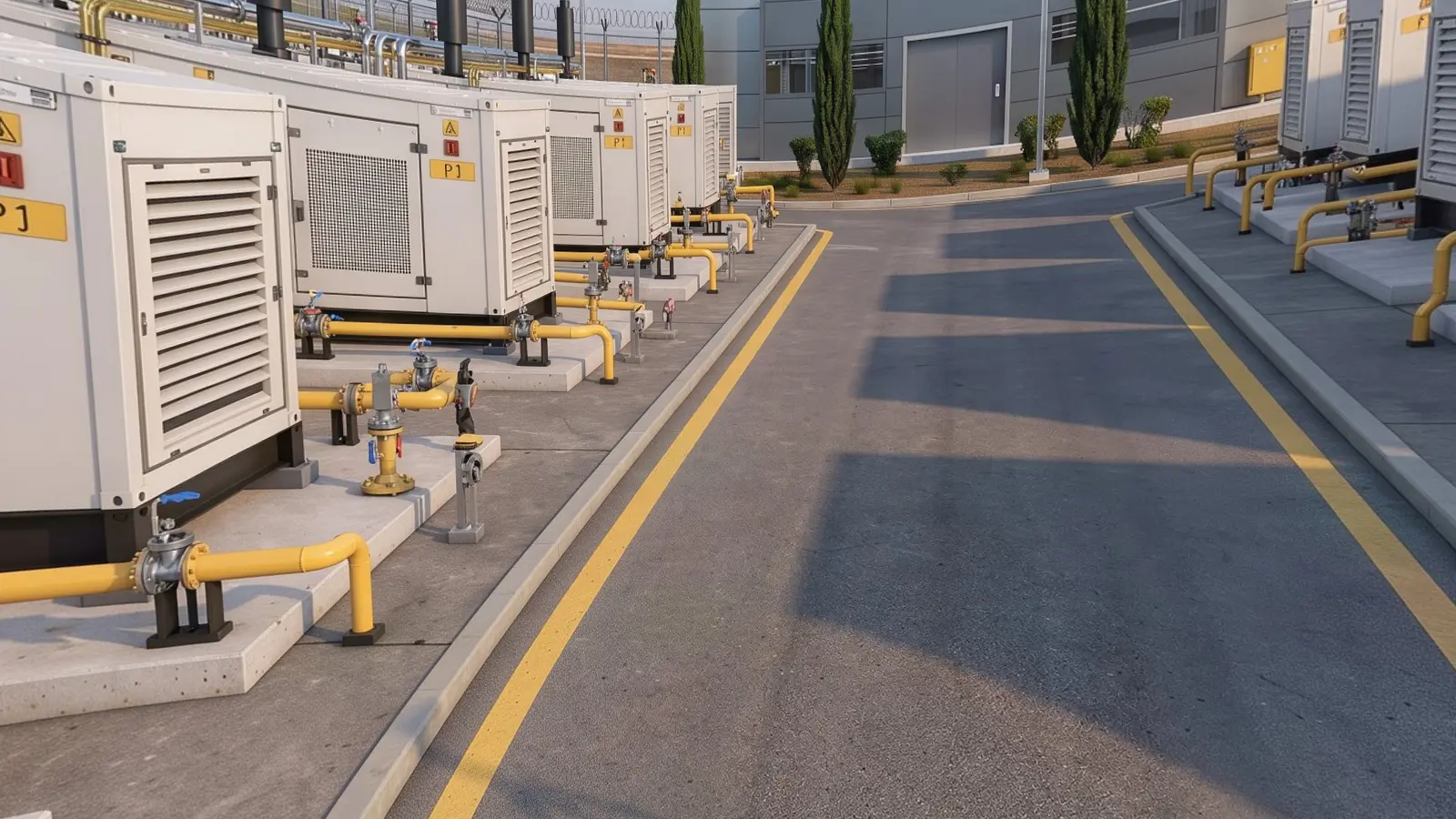 Rendering
What the fuel infrastructure includes
- Pits and foundationsExcavation, containment liners, anchoring and concrete foundations for tanks and equipment.
- Underground tanksDouble-wall storage tanks, lifting, placement and connection.
- Above-ground tanks and day tanksAbove-ground tanks on steel frames and day tanks beside the generators.
- N+1 feed linesRedundant feed lines so every unit keeps receiving fuel even when one line is out of service.
- Transfer pumps and valvesTransfer systems, valve manifolds and fill systems.
- Leak detection and monitoringSensors, tank monitoring and connection to the site's control systems.
- Testing and documentationPressure and tightness testing of every section, with documentation for handover.
- Professional coordinationWorking with the electrical consultants, the designers and the regulators throughout the project.
From the pit to the control connection, in five stages
- 01Planning and coordination
Studying the electrical and generator plans, coordinating with the consultants and planning the sequence of work.
- 02Pits and foundations
Excavation, containment liners, concrete foundations and anchoring.
- 03Tanks
Lifting, placing and connecting the storage tanks, the above-ground tanks and the day tanks.
- 04Feed lines
N+1 feed lines, pumps, valves and leak detection.
- 05Testing and connection to the generators
Documented pressure and tightness testing, connecting the day tanks to the generators and the control systems, and handover.
Data center project: tanks, day tanks and feed lines
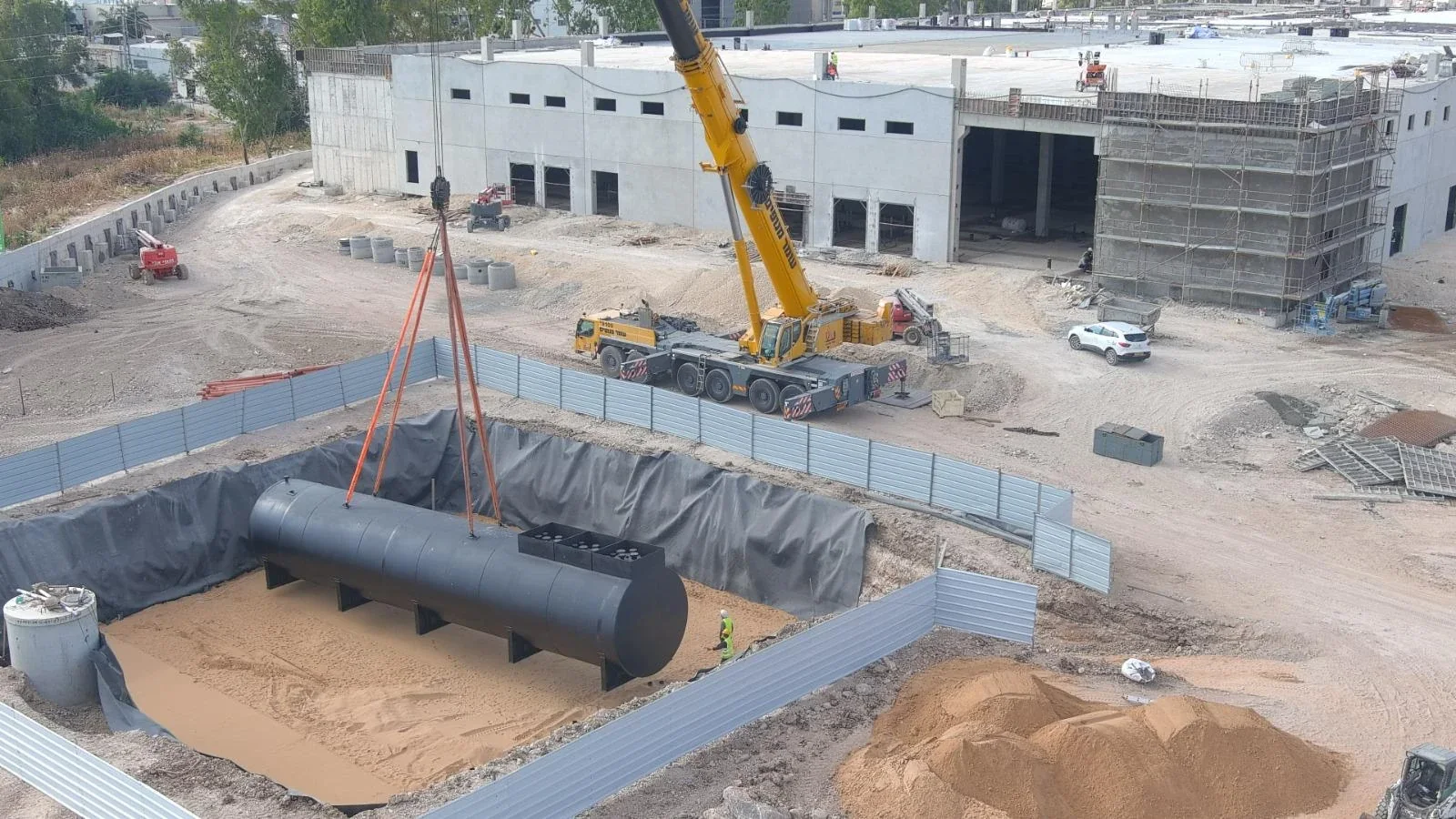
Our clients include an international cloud provider, for which we carried out a data center project. As the photos on this page show, the work includes placing large storage tanks in a pit on a containment liner, crane lifts, above-ground tanks on concrete foundations, valve manifolds and feed lines, and on-site welding and connections.
Want to understand how the backup system is built? Read the article on Emergency Generators for Data Centers. All projects
Data Centers From the Field
Questions about Fuel Infrastructure for Data Centers
What is an N+1 configuration in feed lines?
Every unit receives fuel from at least two lines, so if one line is out of service, for maintenance or a fault, the generators keep receiving fuel.
Do you work with the site's electrical consultants?
Yes. The fuel infrastructure is designed and built in coordination with the electrical consultants, the designers and the regulators, and connected to the site's control systems.
What is the difference between a storage tank and a day tank?
The storage tank is the main reservoir, usually underground and double-wall. The day tank is smaller, sits beside the generator, and is fed from the storage tank through the feed lines.
Planning a data center? Let's go over the plans
Send us the project details and we will call you back for a short conversation. We will gladly review the electrical and generator plans before quoting. Or call the office directly: 08-622-9307